What I'm Doing Right Now

Wednesday, March 9, 2011

The Vault - Entry 8 - DID Role-Playing Shooters Ever Work?

This was originally posted at the official TF141 Media website: tf141media.wordpress.com, I'm just copying it to here because I wrote it with Alice Thompson, and Elinor Bass.


There's an old theory that's been passed around from time to time: "If it ain't broke, don't fix it." Games have been improved over long decades of new genre ideas and production delays. It's wicked stuff, but, in the end,
there's been some real groundbreaking, globe-trotting masterpieces, and unspeakably pathetic, totally uninteresting flops. And yet, now with games like the Fallout series, Borderlands, S.T.A.L.K.E.R., hell, even Mass Effect, has everything been as crisp, clean, and award-worthy as they are today? Role-playing has had a massive effect on video gaming today, and a good one at that, but also one of the saddest. With constant court fights between our supporting studio Bethesda and Interplay on Fallout Online, the genre has, as of right now, come to a halt, for we're breathlessly waiting for something to happen in the Fallout universe.

Well, I guess a fairytale won't always have a happy ending.

WHEN DID IT EVER START?

Well, if you get beyond Dungeons and Dragons, the incredible success that it was, the RPS genre started way back in the 80's, actually. There was a man. A man named Brian. Brian Fargo, that is. He founded the
company (that most of us at TF141 Media don't exactly love), INTERPLAY ENTERTAINMENT, on October of 1983. At the time, Interplay was very, very small. There were only four-five employees at the time (most of which slipped past my mind, I apologize). In 1984, under the assistance of Activision, Inc. (just like us under Bethesda), Interplay kicked off their career with three unsuccessful games.

But, that's beyond the point. After the success of The Bard's Tale, or Tales of the Unknown: Volume 1, nearly three years later came the "official" RPS, in 1988. Wasteland. Wasteland was massive, Wasteland was, by all means, the start of the RPS genre. It was huge. Named #9 computer game of all time, the single game that made RPG heaven.


And it had everything that made Fallout, another good example of an RPS, good. Each of the characters were different in statistics and aspects. There was Strength, Intelligence, Luck, Health, Climb, Picklock, Rifles, etc.
You still gained XP like you do in Fallout when you "reduce a bandit to mincemeat" (trash talk in the game), you still gained levels like you do in Fallout, and your survival was numero uno: your hygiene, food, water,
ammunition, everything that you HAVE to have in a nuclear wasteland. You can recruit NPCs like in Fallout (anybody remember Dogmeat?), and take them out just as quickly, if you please. Combat messages, like your
limb strength, were also in Fallout.

I think that one of the major effects on gaming the first Fallout DID have was that it was different. You had to survive to thrive. There wasn't one way or the other: Fallout would grow difficult as time went by. RPGs are
supposed to have a place: they're supposed to be more time-consuming, more difficult, and more rewarding than usual games. Most games with big dudes and guns are simple: you run, shoot to kill, continue to the
next level. Role-playing shooters make sure you earn your progression and stats.


Borderlands' looting experience was one of the best in the game, and one of the reasons it is popular.
WHEN DID IT WORK?

After Fallout, it seems that role-playing shooters expanded vastly. Games like System Shock would go to become some of the most acclaimed games of all time. Then came other games like Mass Effect, BioShock, and the S.T.A.L.K.E.R. series are not only some of the best games created BECAUSE they're so diverse, they took a hint from games like Fallout. The Elder Scrolls series, for example, benefitted because of all the
breakthroughs in Fallout and other Role-playing Shooters. It wasn't until Fallout 3, though, when the true-to-life genre that are "RPS games" came about. Fallout 3 was massive. The diverse collection, the limitless freedom, troubling enemies, a brilliant leveling sytem, the game was an absolute rolling stone. Add the increasing number of downloadable content that came out, and you've got a massive game.

Due to the atmospheric nature of Fallout 3 being so free, RPGs were sure to have a better future. And that's for sure. The next game, New Vegas, surely benefitted from all the risk-taking Fallout took. Borderlands was
huge as well. With millions of guns, hundreds of quests, and sixty-nine XP levels. Legendary? Indeed it was. But it wasn't just Fallout. As I said before, games like Mass Effect would eventually have an aftermath that
would help the thunderous success of Mass Effect 2. And we can NEVER forget Wasteland, of course. (I mean, besides the terrible sequel) It feels more like interactive realism, Role-playing shooters. It's like moving from your old house to a new one: it'll take some time to get used to the atmosphere, but once you get into it, you'll find an enjoyable experience, indeed.


Even shooter games' multiplayer is an RPG in itself. Leveling up, an unlocking system, freedom of choice, etc.

And yet, the future for Fallout Online seems bleak. With all the arguments and fines thrashing around from Bethesda and Interplay (with the poor fans in the middle of it all, not to mention our studio and Masthead), it seems that we'll have to wait another long decade, like we did for the big switch from Fallout 2 to 3. Well, I guess it's not always happy in Neverland.

So, the $60,000,000 question still remains: DID role-playing shooters ever work? Well, yes and no. Fallout did break all the taboos of role-playing games today, but it seems that a lot of other games have tried to copy the success, with only few actually meeting the expectations. But until Fallout Online comes out for the PC, I guess we'll have to stick with shooting and looting through New Vegas.

But I guess what they say is true: War... War Never Changes.

Tuesday, March 8, 2011

Monday, March 7, 2011

Going Gold - Interview with the MARS TV President

While TF141 Media is not supportive of, nor involved with, the United Kingdom-exclusive gaming channel, MARS TV, by chance they helped support us on an excellent feature on Fallout New Vegas' "behind-the-scenes" with TF141 Media. They even have a radio channel in Japan. So, the president of Mars TV, Caesar "Going Gold" Kaspar, who directed the Behind-the-Scenes Featurette, at 9:30 Eastern Time, Pierce "The Joystick Doctor" Sanders was interviewed by Kaspar at his home studio, on a radio interview, on August 22nd of 2010.

---

Kaspar: So, out of all the projects for Bethesda that you've done, which one do you consider to be the most important? What's the most difficult subject you've followed through in New Vegas?
Pierce: Well, the concept art that Obsidian had asked us to copy through into the game, which we were shipped overseas to finish up, was really difficult. What I mean by that is that there's a lot of locations in the game we had to copy into it. There's a lot of work we had to put into it, a lot of revising and mixing colors. One of the hardest was an Air Force Base we had done for a faction in the game. Designing the weapons and ammunition, and bringing them with the game system, was also rather difficult.
Kaspar: Speaking of factions, that brings me to another subject: I have a poster right here, who IS that armored fellow with goggles and a pistol?
Pierce: Classified.
Kaspar: Ha ha. That's rich! Okay, so, what's your opinion on Bethesda Softworks, and how do you think they've affected the RPG genre?
Pierce: Whoa. Heh. Well, I can say in all honesty that Bethesda is one of the most strict companies we've ever worked with. Working on Fallout 3, Oblivion, and New Vegas were tasking challenges: we had to follow everything, and get blamed for everything, and get praised for everything, but in the end, the Bethesda studio is awesome. Having a part in composing the score for Oblivion was one of the most extraordinary experiences we've ever had.
Kaspar: Now, will there be NPCs you can recruit into your party on New Vegas like you did in Fallout 3?
Pierce: Yes, indeed, actually. That was anticipated. In the last game, you could recruit companions. So we're trying to recreate that again, and we've made some progress. I won't tell who will appear, though.
Kaspar: Could you give us some information on Hardcore Mode?
Pierce: Ah, Hardcore mode. Well, in Fallout 3, you had the choice of a 'Very Hard' mode. Well, Hardcore is trying to adapt realism into your adventures in the Wasteland. For example, Stimpacks, which were first aid in the last game, can't heal you instantly. You'd have to wait over time for them to actually help bring up your HP. In the last game, your backpack ran on a weight system, where if your backpack goes over the weight limit, you're overencumbered. Well, here, ammunition also has weight, unlike in the last game, but that's only in Hardcore mode. You have to go through various sleep cycles regularly, you'll have to eat fresh food that you can find from vendors, and you have to drink water, or you'll die from dehydration. Also, crippled limbs, which, normally, you can heal with just a Stimpack, have to be healed with a specific first aid kit that you can buy. Oh, and your NPCs that you recruit can die.


Kaspar: Whoa. I guess that really is for expert players. And what about the pip-boy, your ever-awesome interface from Fallout 3? Is that returning?
Pierce: The Pip-Boy 3000 will, yes, make a return. It will be the pack that will help you heal your limbs, put on some armor, change your weapons, heal yourself, take away radiation, and check your status.
Kaspar: Is there anything big and brand new coming up in New Vegas?
Pierce: For starters, there's a reputation system. You'll meet various factions throughout the game. Unlike in the last Fallout game where, if you were evil, everybody hated you, and if you were good, everybody liked you, instead you can build reputations. So you can be hated by one group if you constantly kill their members, defy their rules, and go against orders if you're following their storyline, and you can be liked by another if you complete a quest that they have you do, give some caps or weapons to them, and help defeat the enemy team. Some factions will have alliances with one another, others will have you trying to take down the other.


Kaspar: If I can interrupt, what kind of side quests can we expect?
Pierce: Well, obviously some faction side quests. We actually have something new to the game: there are various side quests that are actually related to the main quest. So you have to complete one or two side quests in order to continue on through the main. You can have scavenging missions, mercenary hiring, help someone build something, or just help with some community project, maybe give some stimpaks or bandages to a local medical vendor, or guard a building from someone else. We'll have some quests that will earn achievements.
Kaspar: Are other characters in the game affected by your karma, if you're good, neutral, or evil?
Pierce: It all depends on whom you have a reputation with. Unlike Fallout 3, where it took a long time to get your karma back up unless there was some big, massive quest, like sacrificing yourself at Project Purity in the previous game (DAMN IT, PIERCE, NO SPOILERS FOR THOSE WHO HAVEN'T PLAYED IT! - Alice Thompson), nobody really cares unless the town likes you.
Kaspar: Interesting. Are there any new weapon reports? Any weapons returning?
Pierce: I won't spoil a whole lot. But, there was an awesome weapon from a DLC in Fallout 3 that will be returning with an upgrade. The Tesla Cannon from Fallout 3 is returning. As for new weapons, we'll have a few new repeaters and energy weapons, like the Varmint Rifle. Oh, and a Grenade Machinegun. Wicked stuff.
Kaspar: Say we got into the Vegas part of New Vegas. Will there really be gambling?
Pierce: Actually, there will be. We'll be doing Blackjack and Roulette, which is pretty much all I'll reveal. There'll also be a system where you have to buy Vegas chips if you want to Gamble.


Kaspar: There's still going to be a Speech system, right?
Pierce: The Speech system was important in storyline progression, character development, karma, everything possible in Fallout 3. That's a no-brainer that it'll be returning. Towards the end of the game, expect a lot of Speech Battles, with are basically all-out frantic fights, but you have to use a Speech skill. There are some perks that you can use, like in the last Fallout.
Kaspar: Will there be a PAL import version of New Vegas? I live in The Netherlands, so...
Pierce: For those Japanese listeners out there, there's also going to be a SECAM edition. In other words, yeah, there is going to be a PAL import and a SECAM import.
Kaspar: Now, is there anything different you're trying to achieve with New Vegas?
Pierce: Achieving the kind of success in Fallout 3 would be pretty difficulty, considering the near decade-long time we had to work on it, but considering the evolution of the series, I think we'll do it. If there's anything we're trying to achieve is to make New Vegas more time-consuming, more difficult than New Vegas. You'll have to EARN what you get, like in Hardcore. We're also trying to prove to other gamers out there that 'well, it isn't Call of Duty, so it sucks!', and it's different. Elder Scrolls 4 was first-person, but the mass out there sell for games like Halo and Call of Duty, and while I think that they are excellent games, they're overrated at times. Fallout is us trying to reinvent opinions in a way.
Kaspar: How big will the exploration be? It isn't just another expansion to Fallout 3 is it?
Pierce: The Mojave will be just as diverse and large as the Capitol Wasteland. Whereas in Fallout 3, where it covered in the east near Maryland, Pittsburgh, D.C., and Virginia, New Vegas will cover the West in Nevada, California, and Arizona.
Kaspar: And any reports on DLC?
Pierce: We're working on it.
Kaspar: Well, that's all folks. Thank you very much.
Pierce: It's been a pleasure. Thank you.


I think Scott Garcia has a recording of the radio interview. It was about... oh, 5-6 minutes. I'll post up some images later.

Saturday, March 5, 2011

Killzone 3 Review

Title: Killzone 3
Systems: Playstation 3 Exclusive
ESRB: M for Mature
Format: 3D (3-Dimensional), Online Capabilities, Subtitled, NTSC
Developers: SCEA, Guerilla Games


Well, it's been a WAY long time coming. Hoo boy. Last year, there are several games that absolutely attacked the market. Halo: Reach, Mass Effect 2, Fallout: New Vegas, Starcraft II, Call of Duty: Black Ops, these are among the games that are, right now, quite possibly the most powerful gaming pieces of all time, and some of the most acclaimed.

Now, with all the great promises of a fantastic 3D experience that will knock you out of your seats, is Killzone 3 worthy of the true greatness that it seems it deserves? The answer is a resounding, thankfully pleasing yes. Killzone 3 is amazing in its own way. Immense. Epic. Addicting. Fast-paced. Killzone 3 is one of the most anticipated PS3 releases of all time, and one of the most rewarding, but also one of the most annoying.


Killzone 3 is NOT the 3D experience that it promised. Killzone 3 is NOT another James Cameron's Avatar in a game. Playing Killzone 3 in its 3-Dimensional version is really unimpressive. It's foggy and sometimes blurry, and it feels a little more rushed than usual. However, aside from the terrible 3D effects, Killzone 3 is still an amazing experience, visually and tonally. The cinema, the inking and painting, textures, visual effects, in its entirety, Killzone 3 is astounding. Watching those LS57 SMGs fire is a visual thrill ride that you will NOT want to miss, and it's one of the greatest visual adventures you will ever experience.

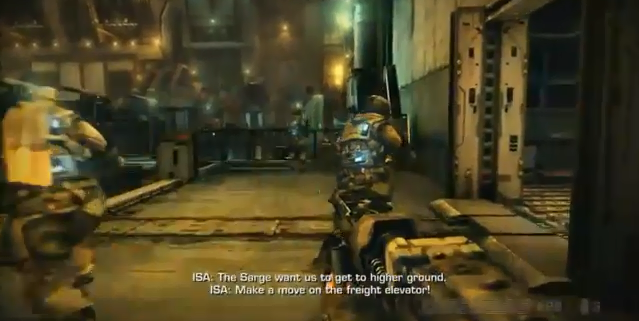
Story-wise, Killzone 3 is a massive hit-and-miss. In fact, it basically progresses like EVERY OTHER WAR GAME. You've got two alternate factions. First you have the Helghast, from the planet Helghan. From the fire-like goggles to the eerie masks, the Helghast are WICKED. On the other side, you play as Sev, on the alternate, slightly more annoying ISA, the faction from Earth's military. Sev returns from the second game, and, like the second game, Killzone 3 continues the questionable ending from the second, with the ISA soldiers holding off the Helghast.


The story is otherwise obvious, average at best, and feels like it could of been written at the last minute. Whereas games like the Halo franchise strives to create a hooking story that sucks you in with its excellent characterization and complex, exciting storyline, Killzone 3 does the exact opposite, making an average, low-budget war film story. The character development also feels a little weak. The beginning of the story, for which I won't reveal for spoilers, feels the most worthwhile, but the scriptwriting AND storytelling is generally slow and takes a hell of a lot of time to build on the player.

The second half of the game feels a little better than the slightly less tolerable first half. But from the first 15 minutes of the game, you'll know who the bad guy is, you'll know what the mission is, etc.

Action-wise, the single player experience does better. First of all, the weapons are given a really good improvement. From the M82 Assault Rifle to the Sentry Turret to the LS13 Shotgun, pressing the button to trigger the gun and blow off the Helghast's ugly, disgusting skulls in a burst of gross, crimson blood, the guns are entertaining and fun to use. Fighting with your fellow Marines is always a fun experience, no matter what the objective.

The difference between levels is also somewhat good. You're never doing the same thing over and over again, akin to the clumsy, but good Left 4 Dead series (although the game's very good, you're still doing the same thing, and that's killin' zombies and wasting health kits). Using the LS209 Exoskeleton (correct me if I'm wrong, fanatics), or raining turret fire on a vehicle, or piloting a kickass spaceship, the game's action is definitely kick-ass and definitely will appeal to action junkies.


The different environments will also help expand the diversity of exciting combat. Whether you're on a ship in the freezing tundra, or a windy, bleak wasteland, or invading the Helghast territory, Killzone is different. The situations are also different.

The real meat and potatoes of the package, though, is the award-worthy multiplayer.

The common Team Deathmatch on Killzone 3 is Guerilla Warfare. One team is on the ISA, the other team is on the Helghast side. Like in TDM, your team has to get enough kills to win the match. The mode is generally fun, and it can be just as annoying as usual online Deathmatches.

Warzone is for the patient players. Warzone can go up from 8-24 players on modes like Search and Destroy, Capture the Flag. The modes will constantly change, from hunting somebody, to stealing an objective, from a standard match, which very brief intermissions in between each game. Warzone can be time
consuming, in the best way to say, but also one of the most awarding.

Lastly, Operations deals with offensive-and-defensive modes, with ISA and Helghast, most of the time respectively.

In Killzone 3, you have the choice of five different classes: a Field Medic, who usually takes a Submachine Gun or Shotgun for a primary weapon, and a revolver for a secondary. They obviously have the ability to revive incapacitated players and help give them a boost with health kits. The Engineer class can take up a Light Machine Gun and Battle Pistol for the primary and secondary weapons. They can help repair broken turrets, ammunition-giving machines (dispensers, I believe?) and sentry guns. The Marksman class will have a rifle or sniper for the primary weapon, and a machine pistol for a secondary. The Marksmen help hide the team on the mini-map and cloak themselves, again not showing on the mini-map for a limited amount of time. The Tactician class has an SMG or a Machine Gun for a primary, and a Missile Launcher for a secondary. They can help do Reconaissance on the map, and can also help make spawn areas for tactic areas. Finally, the Infiltrator class (my personal favorite) will usually have an Assault Rifle for a primary, and a Missile Launcher for a secondary. They have the cool ability to cloak themselves as one of the opponents (like, if you're an ISA soldier, you can disguise yourself as a Helghast, and vice versa), and can increase stamina.

Killzone 3 also has an awesome unlock system, and you can take up side-jobs during multiplayer matches (kill x number of players, reach level x, capture x number of flags, win x number of matches) in order to get a better weapon, or upgrade your primary and secondary abilities.

And Killzone 3 is also compatible with Playstation Move, which recognizes player movement. This is my first introduction to the system, and, I have to say, I'm utterly unimpressed, but also quite intrigued. The shooting mechanics on Playstation Move is actually just as good as the SixAxis controls, if not a little more fun. The responding is also generally good. However, compared to the actual controls, anything else besides the shooting is ridiculous. Here's a mental note: NEVER reload during the move controls.

Killzone 3's god awful boring storyline (not to mention predictable) is usually forgettable. Even worse, there's no online cooperative capabilities. Playing through the single player storyline with a friend would of been great,
but that's not here.

Besides the Move controls, no co-op, bad characterization, and numerous plot holes, Killzone 3 is definitely a must-have for those wanting to continue the greatness. The multiplayer is just as good as you'd expect it to be,
and is up to the standards of Call of Duty and Halo. Highly recommended, for sure.

The Vault - Entry 7 - The Dethalbum

Title: The Dethalbum
Artist: Dethklok
Released: September 25th, 2007
Format: 16 Tracks, 52 mins. long, Williams Street, Available in Vinyl
Genre: Death Metal

--

I've always had kind of a different view on music. I was an absolute fanatic when it came to it. Back when I was a kid, I used to listen to music like The Scorpions, The Beatles, and Rolling Stones, examples of bands that, to this day, are still considered classic artists. And yet, somewhere after the 70's and 80's, everything seemed to change. Music started to degrade into the pop genre, a torpid, over-insulting type of music, featuring solo artists either signing about girls, love, and about the world (although Michael Jackson is still the greatest pop artist of all time), the R&B genre, and Metal went from overwhelmingly likable and very head-banging to deafeningly unlikable noise. Hard rock was forgotten almost entirely.

So when I first saw The Dethalbum, I really didn't care. Let's go with this: Dethklok is actually featured in a show.

The show's called Metalocalypse: based on the adventures of the band. It was started by Brendon Small, who is the vocalist, guitarist, and electric bassist, and Gene Hoglan, who does drums and back-up vocals. A 2-man band does sound impossible, but they do it. In the show, they both have alter egos.

The characters in the show are Nathan Explosion, the vocalist (and alter ego of Small, in many fans' eyes), the "lyrical visionary" of the band, who always wants the band to be the most brutal in the world, and who can never seem to speak normally because he speaks with a death growl. Skwisgaar Skwigelf (the other alter ego), the lead guitarist and who thinks he's the greatest thing to ever come out of a vagina in the world. There's also my personal favorite, Toki Wartooth, who's the rhythm guitarist and seems to have a more distinct accent, like Skwigelf (we're Dethkloks!), Pickles (the alter ego of Gene Hoglan), who's a beer addict and the drummer of the band, and William Murderface, the bassist and the most mentally confused of the band.

Personally, aside from the somewhat likable characters, I hate the show. The humor's not very good, but the first couple episodes of the first season are at least worth checking out.

The Dethalbum is an album that, surprisingly, I actually kind of like. It has a certain humorous twist to the lyrics (although they're not ALWAYS funny) and great guitar work. I also think that Brendon Small is, as Dethklok should be, the most brutal vocalist ever, and also a kickass guitarist.

But, since it's not the same anymore, I also dislike the album.

Here's my opinion on each of the songs:

1. Murmaider - "It's about mermaid murder!" - Murderface. Okay, so this isn't exactly very good or funny. The lyrics are okay, especially when it lists off the weapons they need (You need your - Knife? Check. Rope? Check. Laser Beams? Check.), but that's about it. Below average, especially the guitar beat.

2. Go Into The Water - A much better improvement, Go Into The Water has guitar riffs and licks that will blow you away.

3. Awaken - The story's about awakening a lake troll. Okay, so it's for the fish, but the vocals are an improvement over the previous two tracks, and the solo is actually very good, along with the main riff, which is similarly good.

4. Bloodrocuted - Quite possibly the definition of "noise" that I thought this album would have, it would take months to actually understand what he's saying. Though it's about a guy who's hunted by mercs that mistook him for someone else. Okay, decent lyrics, but too heavy for the potential it had..

5. Go Forth And Die - It's about dying. It's not very good, that's all I'm going to say.

6. Fansong - Quite possibly the most lyrically funny song, it's basically Eminem's "Stan" in metal form. It's about fans who STILL live in their mother's house, stay about 24 / 7 listening and talking about Dethklok.

7. Better Metal Snake - Amazing lyrics about war, with a halfway decent guitar riff.

8. The Lost Vikings - A classic "Honey, can we ask for directions?" scenario, only there's a twist: the Vikings that are lost, they've got too much pride to ask, and actually say they're going around on purpose. One of the best road trips songs.

9. Thunderhorse - This is about as close as an instrumental you'll get to in the album, and it's amazing. The guitar work in this is catchy, and will stick in your head for days. Very reminiscent of old classic instrumentals like Van Halen's "Eruption", or Metallica's "Orion".

10. Briefcase Full of Guts - Twisted. Weird. Bad. Good. Confusing. This song is brutal, by all means. It's about an employee who kills for business.

11. Birthday Dethday - This was my reaction after the song was over: WHAT THE FUCK?

12. Hatredcopter - Well, this song's actually a lot different, because we've actually got a different voice singing the chorus (in the show, it's Pickles the Drummer), but the overall song needs some serious editing.

13. Castratikron - It's about some weird beast from the Earth's core made to kill you. Uh, we've already heard this. Nothing new.

14. Face Fisted - The song is absolutely demented and stupid. Least favorite on the album, it's about an insane person, with weird lyrics to top it off (You have sex with a cake.) Um, this is supposed to be funny?

15. Dethharmonic - It's about dying. Again. Yawn.

16. Deththeme - NOTE: This is actually the intro to the show. Mediocre at best. It's got lyrics that could of been added at the last second (Doodily ding dong tick tock).

OVERALL:

It's actually pretty good for the few good tracks on here, but overall, I'd save your money for more of the definite metal albums out there.


RECOMMENDED DOWNLOADS:

I'd have to say "Thunderhorse" and "Go Into The Water" are the only two tracks I'd call "great", but "Fansong" is also pretty good. Lyrically, "Better Metal Snake" is worth a look.

Fallout Online 2 - Some Production Art

Well, ever since Bethesda sued Interplay in mid-2010 for takin' away Fallout from them (which, to us, they did), there's been various teasing about Fallout Online, like possibilities of a 2012 beta, gameplay footage, etc.

One of our jobs is to help draw some new maps we're planning for the MMO. Here's some that we worked on.

This one was shipped overseas to Masthead for coloring. This one we worked all together to help on the project itself.

FINISHED INKING

The drawing itself took about a week. The inking was a hell of a lot longer. We had to expertly scan it on a computer, and make sure it understood the image properties. Then, we could continue on inking. The program that we used was very similar to popular downloads like Photoshop. The inking took about two weeks. Later on, we had to ship it overseas to Masthead in Bulgaria in order to follow it through.

Techniques for inking:

  • DON'T RUSH! You have to be careful where exactly you do so. One screw-up can really destroy an image. Try and picture what it would look like it your head, then follow through.
  • Make sure you've got a good program / good inking pen.
Later on, Masthead had to color out the concept image using the digital ink-and-paint system used for, arguably, every single game ever made in the last decade.

Here's another one we worked on, but instead of inking, we had to digtally master the picture:


Here's inking before the final overseas follow:


Painting is just as difficult as inking. You have to figure out EXACTLY where to paint it, and a paint mess-up, arguably, looks a lot worse than an ink mess-up.

Tips for paints:

  • Tend to stray away from the usual primary colors. Primary cyan, red, and yellow, in particular, will usually look more like an unfinished picture than usual. Try and mix up the colors if you DO use the primaries, and add a twist, like purple, orange, or green.
  • Secondary colors are okay.
  • Get some help from online websites or art books. Instead of yellow, try gold or towards a little bronze. Instead of cyan, try a darker blue. Instead of red, crimson.
After some tune-ups, the final image was therefore projected.

Anyways, next up will be some updates on armor!

    Tuesday, March 1, 2011

    Adjusting an HDTV

    Whenever somebody buys a TV, whether it's the smallest and most visually unimpressive thing they've ever bought, or the biggest and seemingly good-looking HDTV, you'll never have the exact picture that the developers intended. I'm going to use a Spongebob episode and a Panasonic HDTV to help show a way you can improve your experience.

    This is what it looks like in normal view from a camera's edge. The color is more impressive than this, but it can be better from a normal view, or even one of the biggest geek's view. So, let's run through.

    First, sharply enhance the contrast. This help adjusts the usual 16:9, or 1:33:1 aspect ratio NTSC color. This can help sharpen the overall image and inking around the characters, in cartoon forms. In terms of videogames, the background will look overall more saturated, in a good way. In movie terms, the color seems more technologically advanced in aspect ratio terms.

    Next, adjust the color to somewhere in between 75 and 80, in Panasonic terms. The painting and boldness around the cartoon characters will look significantly improved, almost as if you're watching on a DVD. Remember, if you have a DVD+VCR player, it IS possible to adjust VHS tapes, but don't take advantage, due to DVNR.

    Lastly, attack the sharpness all the way up to 100. This can really improve the edges and overall view on color and contrast. I don't recommend adjusting the tint, due to the color problems that it has. And brightness is fine as it is.

    This is the image after enhancement, looks a lot better than a normal view, and a little better than a normal High-Definition channel.